

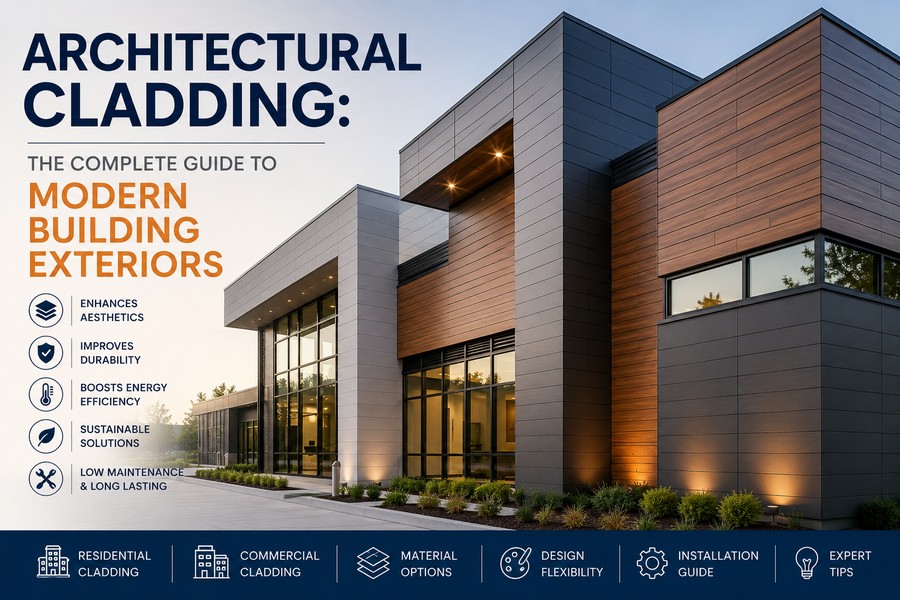
Architectural cladding is one of the most impactful decisions you can make for any building project. Whether you’re renovating a home, designing a commercial facade, or managing a large-scale construction, the right cladding system shapes your building’s appearance, durability, energy performance, and long-term maintenance costs. This guide covers everything you need to know — from material options and key benefits to practical installation tips and expert recommendations.
What Is Architectural Cladding?
Architectural cladding refers to a layer of material applied to the external surface of a building’s structure. It is not a load-bearing element, but it serves a vital role: it protects the building envelope from weather, moisture, UV radiation, and thermal stress while simultaneously defining the visual character of the facade.
In Australia, where extreme weather conditions, high UV exposure, and coastal salt air are common concerns, cladding selection is both a technical and aesthetic decision. Architects, builders, and homeowners are increasingly choosing cladding systems that balance visual impact with long-term resilience.
Common Types of Architectural Cladding Materials
Selecting the right cladding material depends on your climate zone, budget, building type, and design goals. Here’s an overview of the most widely used options available in the Australian market.
Composite Aluminium Cladding (ACM)
Aluminium composite panels are among the most popular choices for commercial and residential applications. They offer a sleek, contemporary aesthetic with excellent weather resistance, low maintenance requirements, and a wide range of surface finishes including anodised, powder-coated, and brushed metallic options. It’s important to specify fire-rated (FR) grade panels in compliance with Australian building codes, particularly for buildings above two storeys.
Fibre Cement Cladding
A proven performer in the Australian climate, fibre cement cladding offers robust moisture resistance, dimensional stability, and compatibility with a broad range of paint systems. It mimics the appearance of timber or masonry while delivering superior longevity and low combustibility — an increasingly important consideration in bushfire-prone zones.
Timber and Timber-Look Cladding
Natural timber cladding delivers warmth, texture, and biophilic design appeal. Hardwood species like spotted gum and blackbutt are popular choices. Alternatively, engineered timber-look products and compressed fibre cement boards replicate the visual quality of real wood with enhanced durability and reduced maintenance demands.
Metal Cladding (Steel and Zinc)
Corrugated steel, standing seam zinc, and Corten weathering steel panels are widely used in industrial, rural, and contemporary residential architecture. These materials age beautifully, develop natural patinas over time, and are highly resistant to wind and impact loads.
Terracotta and Ceramic Cladding
Offering a distinctive textured appearance with strong thermal mass properties, terracotta and ceramic facade systems are gaining ground in Australian commercial and institutional buildings. Their natural composition makes them fully recyclable and environmentally responsible.
Key Benefits of Architectural Cladding for Australian Buildings
Practical Tips for Choosing the Right Architectural Cladding
Navigating the cladding market can feel overwhelming given the sheer variety of products and systems available. Here are six practical guidelines to help you make an informed decision.
- Verify NCC compliance first. In Australia, the National Construction Code mandates non-combustible or fire-resistant cladding for Class 2–9 buildings above a certain height. Always confirm the product’s tested fire performance before specifying.
- Match material to climate zone. Coastal properties need high corrosion resistance; bushfire-prone areas require BAL-rated products; humid subtropical climates demand moisture-tolerant systems.
- Consider the full system, not just the panel. Framing, fixings, flashings, sealants, and ventilation cavities are all part of the cladding system. An improperly detailed installation can compromise even the best panel material.
- Request product warranties and third-party test data. Reputable cladding products carry independent certification such as CodeMark, BRANZ appraisals, or FM Approval ratings.
- Factor in lifecycle cost, not just upfront price. A cheaper panel with higher maintenance requirements may cost significantly more over a 25-year period than a premium product with a proven track record.
- Work with a specialist supplier. Sourcing through an experienced cladding supplier — one who understands local regulations, project logistics, and technical detailing — reduces specification risk substantially.
Architectural Cladding Trends Shaping Australian Design in 2025
The Australian facade market is evolving rapidly. Several trends are defining project specifications in 2025 and beyond:
Dark and charcoal tones continue to dominate residential architecture, particularly in urban and semi-rural settings. Matte black aluminium cladding paired with natural timber accents remains a widely specified combination for contemporary homes.
Textured surfaces — ribbed, fluted, and striated panel profiles — add depth and shadow play to facades, reducing the flat appearance common in earlier commercial cladding applications.
Biophilic design integration is influencing commercial projects significantly, with green walls, natural stone cladding, and timber elements used alongside high-performance weatherproof systems to create buildings that connect occupants to the natural environment.
Prefabricated facade panels are streamlining construction timelines, particularly on apartment and commercial developments in Sydney and Melbourne, where labour costs and programme certainty are major drivers.