

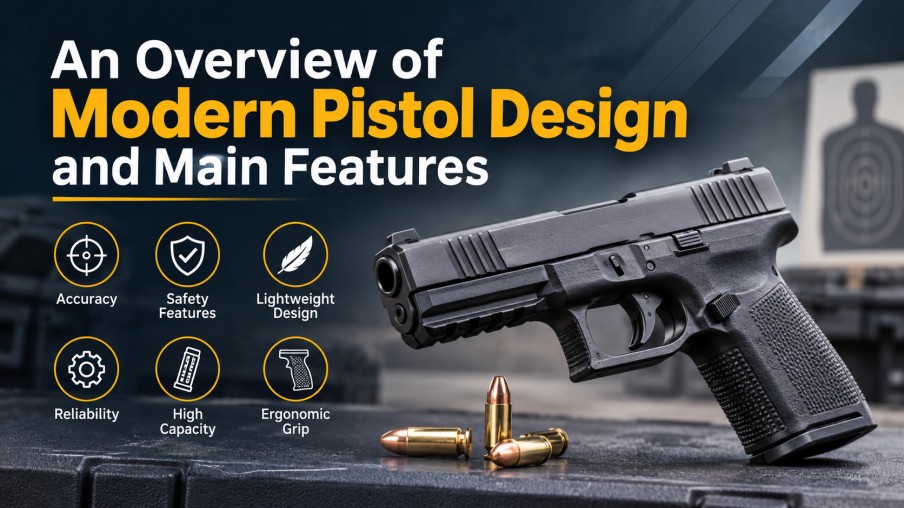
The firearms industry has witnessed considerable changes in design, materials, and manufacturing methods over the years. These developments have influenced how modern handguns are designed, manufactured, and categorised. Modern pistol design reflects a combination of structural engineering, material selection, ergonomics, and safety considerations. From traditional metal-frame models to contemporary polymer-based designs, today’s pistols come in different configurations to meet various sporting, professional, and civilian market requirements. Understanding their general characteristics provides useful insight into the evolution of firearm manufacturing.
Understanding the Basics of Modern Pistol Design
A modern pistol is generally a compact, hand-held firearm with a design that differs from longer shoulder-fired firearms. Its overall construction consists of several major components, including a frame, barrel, grip, and other external and internal assemblies.
The arrangement and construction of these components influence the appearance, dimensions, and overall design of individual models. Manufacturers also consider factors such as material durability, product consistency, and manufacturing quality when developing different pistol designs.
The Role of Frame and Overall Construction
The frame forms the main structural foundation of a pistol. It provides the mounting structure for several major components and incorporates the grip area and trigger guard. Different models may feature variations in frame dimensions, shapes, and materials.
Handgun frame construction has evolved with improvements in engineering and manufacturing technology. Traditional designs commonly used metal frames, while many contemporary models incorporate polymer-based materials or combinations of metal and polymer components.
These variations allow manufacturers to develop different product configurations while maintaining specific structural and design requirements.
Understanding Barrel and Slide Design
The barrel and slide are important components in the overall construction of many modern semi-automatic pistols. Their dimensions, external profiles, and material specifications can vary between models.
The slide is generally the upper external assembly, while the barrel forms the central cylindrical component of the firearm. Manufacturers consider dimensional consistency, material quality, and surface finishing when developing these assemblies.
Although these components may appear similar across different products, their specifications and construction can vary according to the manufacturer’s design.
Materials Used in Modern Pistol Manufacturing
Material selection is an important aspect of modern handgun materials. Manufacturers consider factors such as structural strength, weight, corrosion resistance, manufacturing requirements, and long-term durability when selecting materials for different components.
Steel has traditionally been used for several major firearm components because of its strength and established manufacturing applications. Aluminium alloys are also used in certain firearm frames and components, offering a different balance of weight and structural properties.
Polymer-based materials have become increasingly common in contemporary handgun designs. They provide manufacturers with additional design flexibility and can contribute to lighter overall product configurations.
Surface treatments and protective finishes are also part of modern manufacturing. These may help protect suitable metal surfaces against environmental exposure and everyday wear.
Important Features Found in Contemporary Pistols
Although individual models can differ considerably, several design characteristics are commonly discussed when comparing modern pistols. Understanding these features helps readers become familiar with the terminology used in product descriptions and technical specifications.
Grip Design and Ergonomics
Ergonomic pistol design focuses on the relationship between the firearm’s physical structure and the shape of the grip. Manufacturers may incorporate different grip textures, frame contours, and backstrap designs across their product ranges.
Grip dimensions and external finishes also contribute to the overall appearance and design identity of a model. Some contemporary products feature interchangeable grip panels or different frame configurations to accommodate varying design preferences.
Sights and External Design Elements
Pistol sight systems are another commonly discussed design feature. Different models may incorporate traditional fixed sights, adjustable sights, or contemporary optical-compatible configurations.
External elements such as slide serrations, frame finishes, and integrated accessory interfaces also contribute to the overall design. Their presence and configuration depend on the intended product category and manufacturer’s specifications.
Safety and Quality Considerations in Pistol Manufacturing
Safety is an essential consideration in firearm engineering and manufacturing. Modern manufacturers may incorporate different pistol safety features, depending on the design and applicable product requirements.
These can include passive safety mechanisms, manual safety arrangements, and other built-in protective features. However, the presence of a particular safety feature does not eliminate firearm risks or replace proper storage, legal compliance, and responsible handling.
Manufacturing quality is equally important. Established production processes generally involve material checks, dimensional inspection, and quality-control procedures to maintain consistency across products.
When examining firearm manufacturing standards, readers should also consider the manufacturer’s quality policies, applicable certifications, warranty information, and regulatory compliance. Product specifications and safety documentation should always be reviewed through reliable manufacturer sources.
How Modern Pistol Designs Continue to Evolve
Design preferences and manufacturing technologies continue to influence the firearms industry. Contemporary product development often focuses on more consistent production, material innovation, refined external finishes, and variations in overall dimensions.
Manufacturers are also exploring different approaches to product standardisation and modular construction. These developments allow companies to maintain distinct product ranges while adapting to changing manufacturing requirements.
In India’s domestic firearms manufacturing landscape, Signet Arms is one example of a company working across different firearm categories, including pistols and revolvers. Its manufacturing background also reflects the wider industry’s interest in combining established engineering practices with modern production capabilities.
What to Consider When Understanding Pistol Specifications
Product specifications provide a useful overview of how individual pistol models differ. Rather than judging a product solely by its external appearance, consider the information provided in its official documentation.
Some commonly listed specifications include:
- Frame material:Identifies the primary material used in the frame.
- Overall dimensions:Provides the general measurements of the product.
- Weight:Indicates the specified product weight.
- Construction:Describes the broad design and material configuration.
- Safety information:Outlines the safety features and manufacturer guidance.
- Compliance:Identifies relevant legal and regulatory requirements.
Comparing these details can help readers understand differences between product categories without relying on assumptions based on appearance alone.
Conclusion
The development of modern pistol design reflects continuous changes in materials, engineering, manufacturing methods, and product specifications. From traditional metal construction to contemporary polymer-based frames, different design approaches contribute to the variety found in today’s firearms industry. Understanding structural components, ergonomic considerations, safety features, and manufacturing quality provides a broader perspective on how modern pistols are developed. Together, these elements highlight the importance of engineering, consistency, and responsible manufacturing in the evolution of contemporary handguns.