
Key Takeaways
- Herbal oils help maintain scalp comfort and improve circulation during massage while keeping grooming routines balanced.
- Coconut, castor, and sesame oils provide moisture that reduces dryness across exposed scalp areas.
- Regular massage with herbal oils improves circulation and creates a calmer environment for hair follicles.
- Balanced routines combining herbal oils, gentle cleansing, and scalp care encourage healthier grooming habits.
Introduction
Growing interest in plant-based grooming continues to shape discussions about scalp care routines among individuals looking for gentler ways to maintain hair health. Curiosity surrounding herbal treatment for hair loss usually develops after repeated exposure to harsh cleansers, heavy styling products, or routines that leave the scalp feeling dry and uncomfortable. Herbal oils enter grooming habits as a calmer option because they combine moisture, massage, and consistent care in a routine that focuses on scalp comfort. Regular use of warm oils during massage encourages circulation, maintains hydration, and creates an environment where hair follicles can operate with fewer sources of irritation.
Coconut Oil Traditions in Scalp Care
Coconut Oil and Bald Scalp Treatment
Coconut oil appears frequently in traditional grooming practices because its thick yet smooth texture spreads easily across the scalp and forms a protective layer over exposed skin. Moisture loss occurs quickly in areas where hair density has reduced, which explains why routines connected with bald scalp treatment include coconut oil during massage sessions. Gentle pressure applied with warm oil helps soften dry skin, ease surface irritation, and maintain a comfortable scalp surface.
Several grooming traditions treat coconut oil as a conditioning step because the goal focuses on improving scalp comfort while avoiding exaggerated promises. Warm oil gliding beneath the fingers lets massage movements travel smoothly across the scalp, reducing friction while easing dryness that sometimes accompanies thinning hair.
Coconut Oil in Herbal Treatment for Hair Loss
Blends prepared with coconut oil and plant ingredients appear frequently in traditional scalp care routines, particularly mixtures involving curry leaves, hibiscus, or fenugreek. Home remedies and professional therapies associate these blends with herbal treatment for hair loss because the combination of oil and herbs focuses on nourishment and gentle stimulation. The routine centres on keeping the scalp balanced and helping hair strands move smoothly during grooming.
Warm coconut oil improves the daily grooming process by coating hair shafts lightly and reducing resistance when combing or brushing. Hair strands slide easily through a comb after light oil application, lowering the risk of unnecessary breakage caused by pulling or tangling during everyday styling.
Castor Oil and Scalp Conditioning
Castor Oil and Bald Scalp Treatment
Castor oil introduces a noticeably thicker texture into scalp routines, which explains its reputation as a conditioning oil in traditional grooming practices. Slow spreading and natural stickiness help the oil coat the scalp evenly, forming a light barrier that reduces moisture loss. Exposed scalp areas may experience dryness quickly, so routines associated with bald scalp treatment include small amounts of castor oil to maintain hydration.
Careful application remains important because heavy oil use can create buildup that interferes with comfort. A modest amount applied during massage works well, helping the oil remain close to the skin while maintaining moisture and preventing the tight feeling dryness sometimes produces.
Castor Oil in Herbal Treatment for Hair Loss
Herbal mixtures combining castor oil with ingredients like rosemary, fenugreek, or other botanical extracts appear regularly in traditional grooming routines. These blends connect with herbal treatment for hair loss because they focus on scalp nourishment and circulation instead of dramatic cosmetic change.
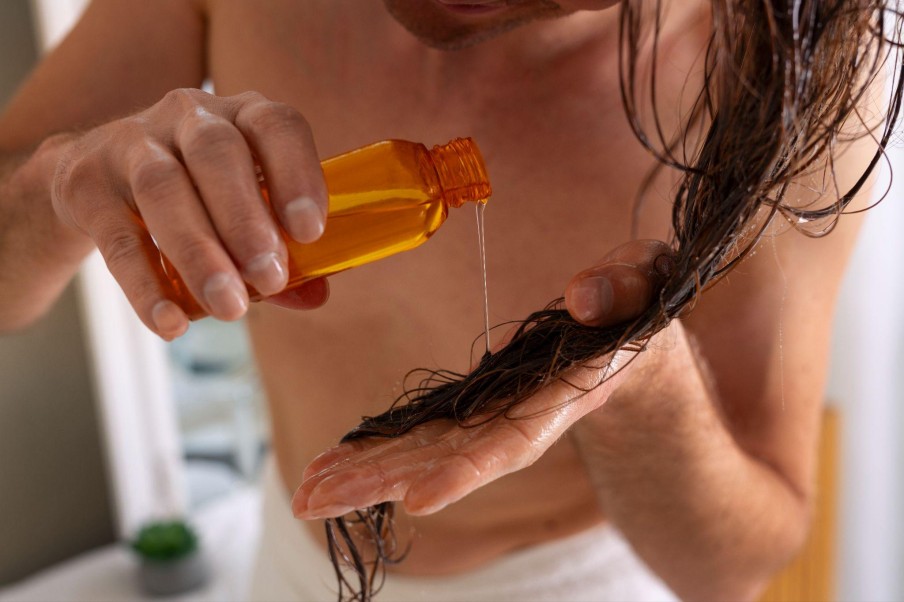
Massage movements spread the oil gradually across the scalp while stimulating blood flow beneath the skin, helping deliver nutrients to hair follicles. Gentle pressure during massage encourages circulation while the oil keeps the scalp comfortable and hydrated, creating a balanced routine centred on consistency.
Sesame Oil and Scalp Massage
Sesame Oil in Bald Scalp Treatment
Sesame oil behaves differently from heavier oils because its lighter texture spreads easily and absorbs without leaving a thick residue behind. Smooth application and mild scent make sesame oil a common base for scalp massage, particularly in routines connected with bald scalp treatment where exposed areas benefit from gentle hydration without heavy buildup.
Massage with sesame oil creates a calming rhythm during grooming routines, letting the fingers move comfortably across the scalp while easing tension that can build during long workdays. Regular massage combined with light oil application helps maintain balanced moisture and scalp comfort.
Sesame Oil and Daily Scalp Care
Daily grooming routines benefit from oils that absorb quickly and blend well with herbal extracts, qualities that make sesame oil a practical choice for frequent scalp care. Smooth absorption keeps the scalp from feeling greasy while maintaining hydration that prevents dryness from building up over time.
Consistency remains the central principle behind herbal oil routines because repeated care across several weeks helps maintain scalp balance and comfort. Calm routines built around massage, gentle cleansing, and herbal oils gradually create a stable environment for hair follicles.
Conclusion
Herbal oils continue to play a reliable role in scalp care because they provide practical ways to maintain hydration, improve massage routines, and reduce dryness across exposed areas of the scalp. Coconut oil, castor oil, and sesame oil each bring different qualities that help maintain comfort while encouraging consistent grooming habits. Regular use in balanced routines helps keep the scalp calm and prepared for healthy hair care practices.
Contact Bee Choo Origin today to explore herbal scalp care guidance and personalised routines designed to maintain a healthy scalp environment.